
2026
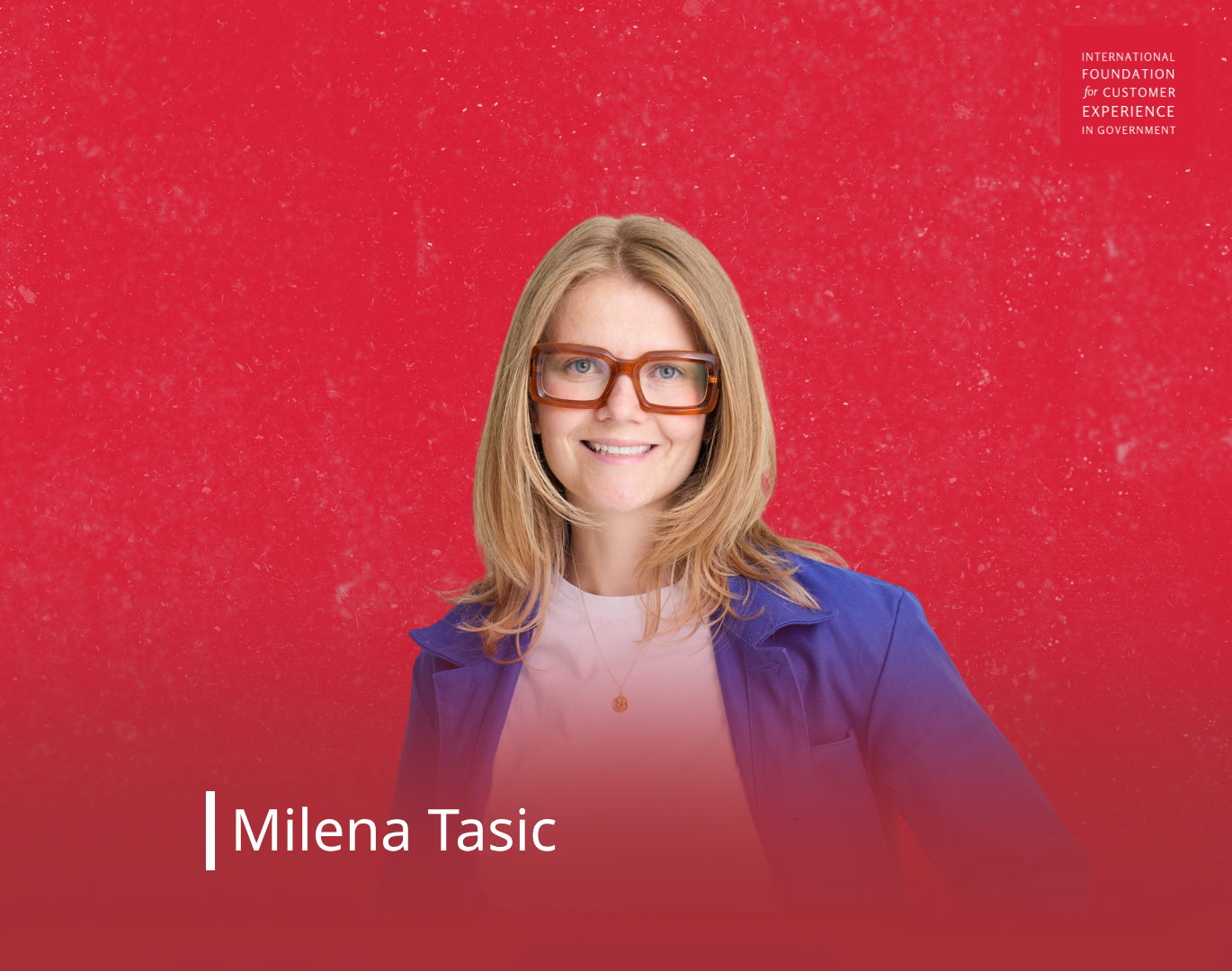
Milena Tasic leads design and innovation at the Innovation hub within Government of Canada. She has been responsible for advancing human-centered design practices across the department, overseeing operations, and building the government’s capacity for sustainable, inclusive innovation. A two-time recipient of national recognition, Milena brings both systems thinking and deep empathy to the forefront of public sector transformation. In this Trailblazer feature, she reflects on her transition from consultant to public servant, the common traps that delay action, and how to embed CX into government DNA.

How It All Started
Milena didn’t set out to work in government, but her consulting projects led her there. What started as internal culture and process improvement quickly shifted into citizen-facing work.
“I landed in the public sector by accident! I started as a management consultant focused on spreading Design Thinking and Innovation practices. At first, my work was about shifting internal ways of working to be more customer experience driven.”
One of her first public-facing projects was in the federal government’s public safety sector.
“There was so much to unpack. From digital transformation to culture change to navigating interconnected systems, the challenges were complex.”
Each project led to the next. Eventually, she made the decision to join the public service directly.
“I saw it as an opportunity to make change from the inside, not just advise on it as a consultant.”
But what made her stay wasn’t the systems, it was the people.
“I care deeply about the work, but even more about the people doing it. If I can help build the next generation of public sector leaders who are ready to navigate complexity with curiosity, care, and confidence, that gives me an immense.”
What Gets in the Way?
For Milena, the challenge isn’t a lack of data, it’s doing something with it.
“I think that we are obsessed with research, to a point of detriment. So much of the focus has been on listening: running surveys, mapping journeys, collecting feedback… The challenge is in actually doing something with it. Activating it.”
This step (from insight to action) is where many teams struggle. They have not been supported or trained to do this kind of work yet. Moving from insight to activation is messy. It is strategic, collaborative, and involves breaking silos.
Her team embraced a practical strategy to change this. They began every new project with a “zero waste” mindset.
“We decided to take on a ‘zero waste’ mindset… using what already exists before creating anything new. It’s hard because it takes more effort up front. We have to review all of the past research, and then make sense of it. But doing this allows us to build on existing foundations, and it’s a nice nod to all the great work that came before us.”
Her advice to others is direct: don’t hide behind more data.
“Check in with your teams. Are you asking for more data because it’s needed, or because it feels safer than taking action?”
A Vision for the Future of CX
Milena’s goal is to make CX a natural part of how government operates, so embedded that her own role might no longer be needed.
“My hope is that dedicated CX teams like mine will no longer be needed. That might sound controversial, but to me it would mean that CX has become part of how public sector organizations work.”
Right now, CX experts often step in to help teams refocus on the people they serve. In the future, she believes every team should have the tools and confidence to do that themselves.
“CX should not be a specialty. It should be something everyone feels responsible for and capable of doing.”
She envisions CX as part of the operating system of governments.
“We are here to teach them how to fish, so this mindset becomes part of how they work every day and the skills become interwoven as part of the DNA.”
That shift, she says, will require structural changes; especially in leadership; Including more ‘Chief Design Officer’ roles in government. Leaders who can bridge policy, service delivery, and strategy, and who are trusted voices at the executive table.
And with that level of leadership support, CX can become measurable and resourced.
“If we have that, and we follow the saying of ‘what gets measured gets done, then that might lead us to CX being more readily reflected in budget and program planning cycles, skills development, and maybe even performance management.”
Advice for the Next Generation of CX Leaders
“Be like a spy. Observe and listen. Pay attention to what is said, what is not said, and what people show you through their actions, workarounds, or frustrations. The insights are always there.”
Milena’s first piece of advice is simple: listen. But listen deeply. She recalls a time early in her consulting career when she felt pressure to speak up rather than slow down.
“When I first started… somebody gave me really good advice: listen more than you speak. I wish I had taken that seriously.”
“I made more mistakes. I pushed for change too quickly, before understanding the system or the people already doing the work.”
Over time, she learned that change starts with humility, not answers. Innovation is not about coming in with the answers. It is about paying attention, asking better questions, and moving in step with the people already carrying the weight. And if new CX professionals start there, she says, real progress will follow.
”“If you start there, you will build trust. And from trust, real change becomes possible.”